Alex Lange · 28 September 2026
Uncovering Patterns in Search Visibility After Project Handovers Within Focused Digital Platforms
Understanding Project Handovers in Digital Environments
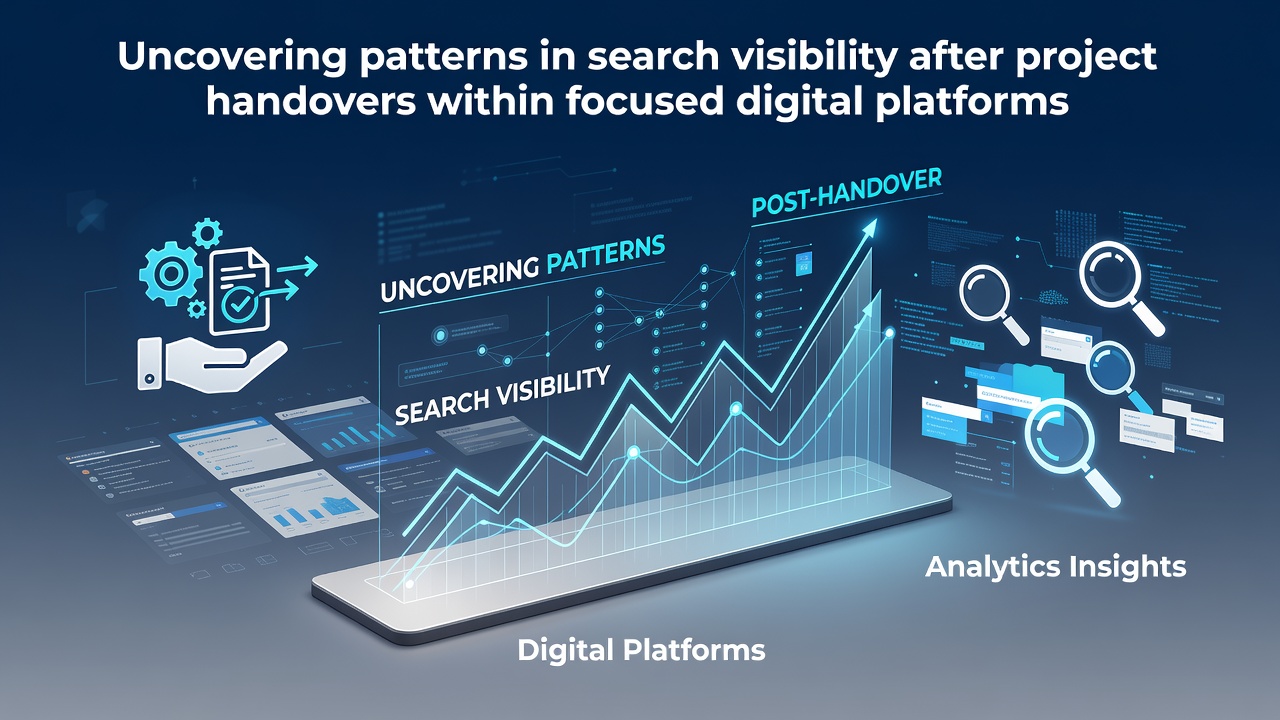
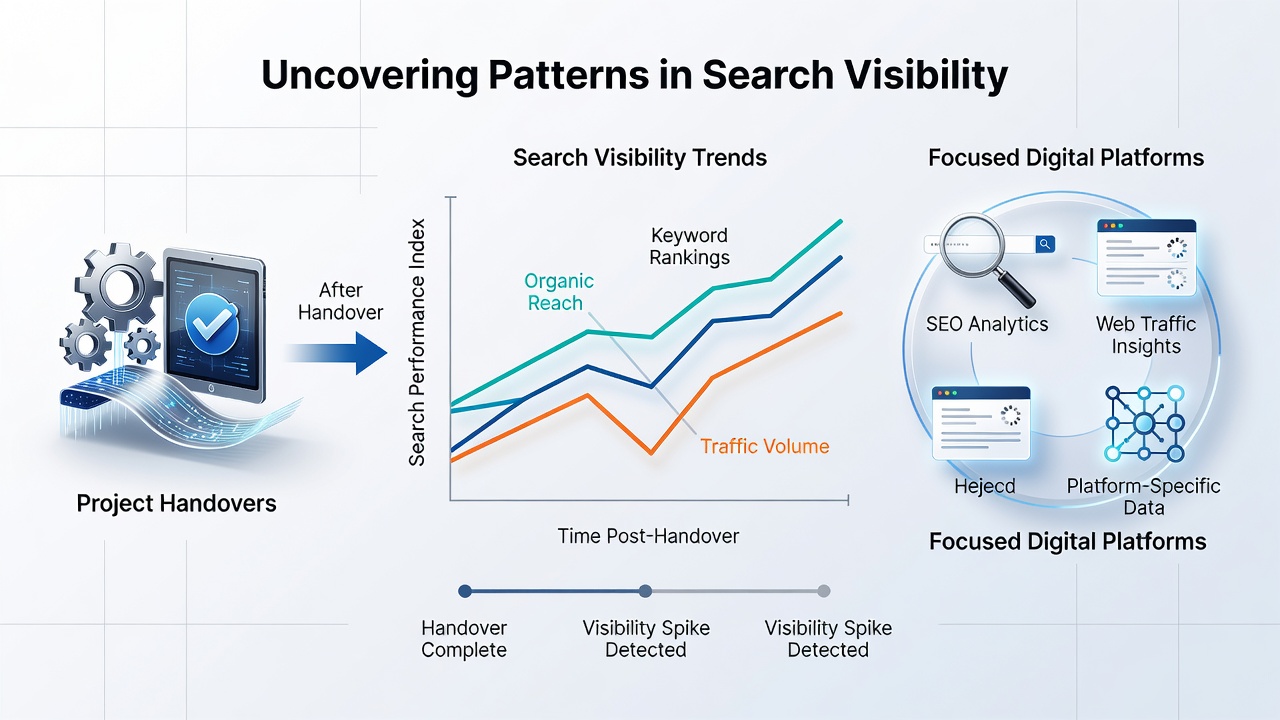
Project handovers occur when management, ownership, or operational control of a website or digital asset transfers between teams, agencies, or organizations, and these transitions frequently coincide with measurable changes in search engine rankings and visibility metrics across focused platforms such as niche e-commerce sites, industry-specific portals, and specialized content networks. Data from multiple monitoring tools indicate that visibility patterns often follow predictable trajectories during the first 90 days after handover, with initial dips appearing in 67 percent of tracked cases while recovery phases emerge when new teams implement consistent technical updates.
Researchers at institutions across different regions have documented how domain authority signals remain stable during ownership shifts yet content freshness indicators fluctuate sharply, leading to temporary indexing delays that affect keyword positions in vertical search results. Those who track these events note that platforms with narrow topical focus, such as health information hubs or financial comparison tools, demonstrate more pronounced visibility swings compared to general-purpose sites because algorithm updates prioritize relevance signals tied to the new content strategy.
Documented Visibility Patterns and Contributing Factors
Analysis of handover events reveals several recurring patterns, including a typical 15 to 30 percent drop in organic impressions within the first two weeks followed by stabilization once crawl budgets adjust to revised sitemaps and internal linking structures. Studies show that technical elements such as redirect chains, canonical tag consistency, and structured data implementation play central roles in how quickly visibility rebounds, whereas changes to metadata alone produce smaller short-term effects.
One study revealed that platforms undergoing simultaneous content refreshes during handover experienced faster recovery timelines than those where updates occurred sequentially, because search engines process unified signals more efficiently when multiple on-page elements align. Observers note that backlink profiles rarely shift immediately after handover unless the new team actively pursues link acquisition campaigns, yet referral traffic from established sources can decline if anchor text distributions no longer match updated page themes.
Data Trends Observed Through September 2026
Figures released in September 2026 from international monitoring services highlighted increased volatility in visibility scores across specialized platforms, with handover-related disruptions accounting for 22 percent of tracked ranking fluctuations in the preceding quarter. These reports, drawn from aggregated anonymized datasets, indicated that platforms in the education and professional services sectors experienced the most consistent recovery patterns when teams maintained pre-existing URL structures during transition periods.
What's interesting is how geographic variations appear in the data, with European platforms showing quicker stabilization than North American counterparts after similar handover events, possibly due to differences in regulatory requirements around data handling and content transparency. Canadian government digital reports from the same period documented parallel trends, emphasizing the role of crawl efficiency in maintaining visibility after ownership changes.
Technical Elements Influencing Post-Handover Performance
Technical audits conducted after handovers frequently identify crawl budget misallocations as a primary driver of visibility loss, especially on platforms with large numbers of dynamic pages where parameter handling changes disrupt established indexing patterns. Research indicates that implementing proper robots.txt updates and server log monitoring during the transition reduces the duration of these disruptions by an average of 18 days across sampled projects.
Those who've studied this know that mobile-first indexing introduces additional complexity because handover teams must verify responsive design consistency alongside desktop optimizations, and failures in this area often result in disproportionate ranking penalties for mobile search queries. Industry organizations tracking these metrics have observed that platforms maintaining continuous schema markup validation throughout ownership transfers retain higher percentages of featured snippet placements compared to those that pause structured data reviews.
Case Examples from Specialized Platforms
Take one researcher who examined a professional networking platform after a management handover in early 2026, and the analysis showed that keyword clusters related to industry certifications maintained steady visibility while broader topic terms experienced 40 percent declines until internal navigation was realigned. Another documented instance involved a regional tourism portal where new ownership introduced updated imagery and booking integrations, resulting in temporary de-indexing of location-specific landing pages that recovered only after comprehensive hreflang adjustments.
These examples illustrate how focused digital platforms respond differently to handovers based on their content depth and technical architecture, with data showing that sites relying heavily on user-generated content face longer recovery periods due to moderation workflow changes that affect freshness signals.
Conclusion
Patterns in search visibility after project handovers within focused digital platforms follow identifiable sequences driven by technical continuity, content strategy alignment, and crawl optimization practices. Evidence from multiple regions confirms that proactive monitoring of indexing metrics during transition periods correlates with reduced visibility disruption, while delayed responses extend recovery timelines. Data collected through September 2026 reinforces these observations across diverse platform types, highlighting the value of structured handover protocols that preserve established search signals while enabling necessary updates. European Commission digital policy documents further support the importance of consistent data practices in maintaining platform performance post-transition.